



Browse Content




Life Worth Living is an initiative of the Yale Center for Faith & Culture at Yale Divinity School.



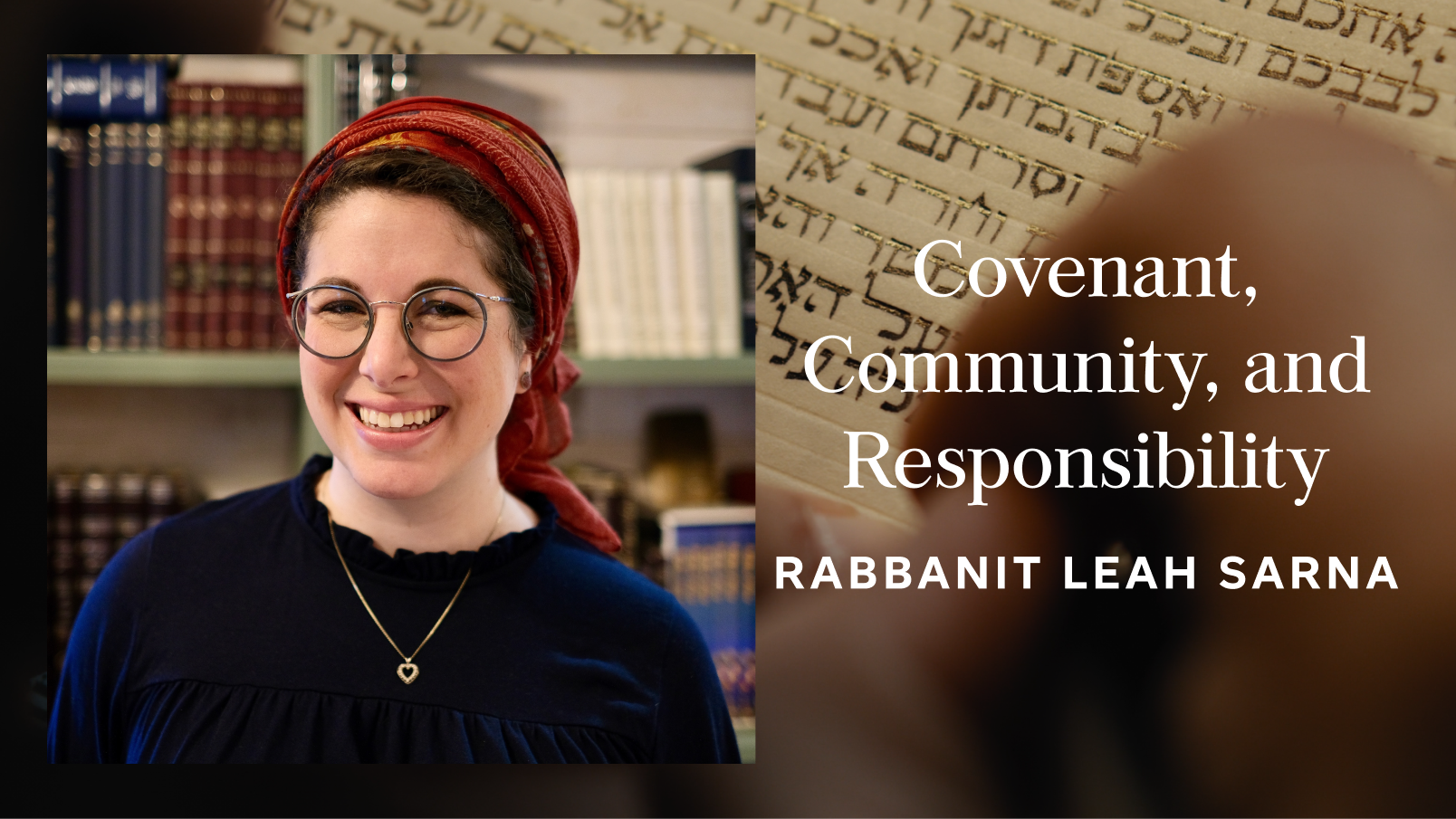
Covenant, Community, and Responsibility: A Jewish Vision of a Life Worth Living
Rabbanit Leah Sarna is the spiritual leader of Kehillat Sha'arei Orah, an Orthodox synagogue in Lower Merion, PA.
“Judaism is all about responsibility.”
Listen on
Rabbanit Leah Sarna’s Life Worth Living lecture explores Judaism’s central question of responsibility: to whom and to what are we responsible? Drawing on Torah, Talmud, and lived Jewish practice, Sarna outlines Judaism’s covenantal obligations, communal life, rituals of forgiveness and joy, and the multivocal tradition of commentary that makes Jewish thought a living inheritance.
Rabbanit Leah Sarna is the spiritual leader of Kehillat Sha'arei Orah, an Orthodox synagogue in Lower Merion, PA. She also teaches on the faculty of the Drisha Institute for Jewish Education. She previously served as Director of Religious Engagement at Anshe Sholom B’nai Israel Congregation in Chicago, a leading urban Orthodox congregation. She was ordained at Yeshivat Maharat in 2018, graduated from Yale College in 2014 with a bachelors in Philosophy & Psychology, and participated in the Life Worth Living Course in its first iteration, in the spring of 2014.
Rabbanit Sarna’s published works have appeared in The Atlantic, The Washington Post, Lehrhaus and the Jewish Review of Books. She has lectured in Orthodox synagogues and Jewish communal settings around the world and loves spreading her warm, energetic love for Torah with Jews in all stages of life.
For more information, visit https://www.leahsarna.com/ and https://www.instagram.com/rabbanitleahsarna/ and https://lifeworthliving.yale.edu/
Rabbanit Leah Sarna is the spiritual leader of Kehillat Sha'arei Orah, an Orthodox synagogue in Lower Merion, PA. She also teaches on the faculty of the Drisha Institute for Jewish Education. She previously served as Director of Religious Engagement at Anshe Sholom B’nai Israel Congregation in Chicago, a leading urban Orthodox congregation. She was ordained at Yeshivat Maharat in 2018, graduated from Yale College in 2014 with a bachelors in Philosophy & Psychology, and participated in the Life Worth Living Course in its first iteration, in the spring of 2014.
Rabbanit Sarna’s published works have appeared in The Atlantic, The Washington Post, Lehrhaus and the Jewish Review of Books. She has lectured in Orthodox synagogues and Jewish communal settings around the world and loves spreading her warm, energetic love for Torah with Jews in all stages of life.
For more information, visit https://www.leahsarna.com/ and https://www.instagram.com/rabbanitleahsarna/ and https://lifeworthliving.yale.edu/
Jewish Responsibility and Peoplehood
- “Judaism is all about responsibility.”
- Responsibility to ancestors, children, and the Jewish people.
- Jewish population still has not fully recovered from the Holocaust.
- Converts become “children of Abraham and Sarah.”
- Jews are bound by covenant through the Torah—both terms and vessel.
Humanity in the Jewish Tradition
- “All human beings are created in the divine image.”
- Torah sees no kinds of humans—one united humanity.
- Humans tasked from Eden to till and tend the earth.
- Judaism rejects original sin; humanity is born not sinful.
- “The world was created for the purpose of forgiveness.”
What It Means for Life to Go Well
- Abraham “blessed in all things” interpreted as long life, wealth, honor, children.
- Jewish tradition values preservation of life above almost all commandments.
- Wealth seen not as shameful but a blessing from God.
- Honor and dignity central to Jewish community.
Commandments, Covenant, and Learning
- Jews bound by 613 commandments plus rabbinic law.
- Gentiles guided by seven Noahide laws.
- Commandments divided between responsibilities to people and to God.
- Torah study is perpetual obligation and joy.
- “The point of learning is fundamental to being a human being.”
Community and Ritual Practice
- Jewish commandments often fulfilled only in community.
- Shabbat fosters tight-knit, local communities without technology.
- Some commandments fulfilled only in the land of Israel.
- Music as memory, emotion, and liturgy—“from Sinai tunes” through psalms.
Radical Amazement and Emotional Life
- Heschel’s vision of radical amazement embodied in daily blessings.
- “Blessed are you God who heals all flesh and performs wonders.”
- “Life is meant to just, like, feel. Like, feel a lot.”
- Shiva as a container for grief; Jewish weddings as unparalleled joy.
Suffering, Justice, and Forgiveness
- Yitz Greenberg: “No statement… should be made that would not be credible in the presence of burning children.”
- Judaism rejects theodicies that justify suffering.
- Healing and medicine seen as divine gift to humanity.
- Reparations central—Exodus, Holocaust, and modern debates.
- Teshuvah (repentance) as return to God, others, and self.
Multivocal Tradition and Living Covenant
- Actions precede faith: “After the actions follow the hearts.”
- Rabbinic law even overrules God’s direct voice—“My children have bested me.”
- Jewish tradition is dialectical, multivocal, and eternally unfolding.
- Jewish practice sustains continuity with ancestors—“something that’s eternal.”
- Orthodox feminism: living with and working to transform a patriarchal inheritance.
Judaism and Responsibility
Rabbanit Leah Sarna insists that “Judaism is all about responsibility.” Jewish life is shaped by obligations to ancestors, descendants, community, Torah, and God. This responsibility carries forward after the Holocaust, where even childbearing is understood as participating in the recovery of the Jewish people. Converts join the Jewish family as children of Abraham and Sarah, underscoring that peoplehood is central. For Sarna, covenantal obligations remain binding across millennia, shaping Jewish identity not just as a matter of belief but of ongoing action, responsibility, and commitment to one another and to God.
Humanity, Forgiveness, and Sin
In Jewish thought, all people are created in the divine image, united as one humanity without divisions of race or worth. Sarna contrasts this with Aristotle’s justification of slavery, showing that Judaism never conceived of subhuman categories. She rejects original sin, affirming instead that humans are born without inherent guilt. “The world was created for the purpose of forgiveness,” she explains, emphasizing that divine intention allows perpetual growth and repair. Sin arises from human choices, not essence, leaving space for teshuvah—repentance and return—as a central practice of human and divine relationship.
Covenant and Community Life
The covenant with God, first sealed at Sinai, continues to bind Jews today through 613 biblical commandments and layers of rabbinic law. Sarna stresses that Jewish life unfolds within community: prayer requires a quorum, Shabbat fosters walkable neighborhoods, and rituals tie Jews together across generations. Practice, not belief, grounds Jewish identity. “After the actions follow the hearts,” she notes, highlighting how obligations come first, with faith often shaped through daily practice. In this covenantal framework, responsibility extends not only to God but also to the Jewish people, forging resilient bonds of mutual responsibility.
Multivocal Tradition and Interpretation
Jewish tradition is inherently multivocal, thriving on dialogue, disagreement, and interpretation. Sarna recalls the Talmudic story where God’s own voice affirmed Rabbi Eliezer’s minority view, only to be overruled by rabbinic majority. God’s response was: “My children have bested me.” For Sarna, this is a foundational moment—rabbinic authority defines Jewish law, even beyond divine intervention. The story captures Judaism’s unique balance of reverence and independence: divine revelation is honored, but human communities bear responsibility for interpretation. Across centuries, layered commentaries keep Torah alive, ensuring Jewish law remains both eternal and evolving.
Joy, Grief, and Radical Amazement
Judaism commands not just actions but emotions. Sarna highlights Abraham Joshua Heschel’s “radical amazement,” embodied in blessings said for food, nature, and even bodily functions. “Life is meant to just, like, feel. Like, feel a lot,” she says. Jewish rituals create space for deep emotions—mourning through shiva, celebration through weddings, awe through music and prayer. Emotional expression is cultivated communally, with song shaping time and seasons of life. For Sarna, Jewish flourishing means living with intention, cultivating awe, and recognizing that every moment—even the most ordinary—is a miracle worthy of blessing.
Keep browsing








Join the LWL Community


