



Browse Content



Life Worth Living is an initiative of the Yale Center for Faith & Culture at Yale Divinity School.



Book Curriculum / Introduction
A Guide to What Matters Most
Miroslav Volf is the Henry B. Wright Professor of Theology at Yale Divinity School and is the Founder and Director of the Yale Center for Faith and Culture.
"In a way, we moderns resemble a painter who is forever concerned about improving their tools. The colors and brushes, the air condition and lighting, the canvas and easel, and so on, but never really starts to paint."—Hartmut Rosa
Listen on
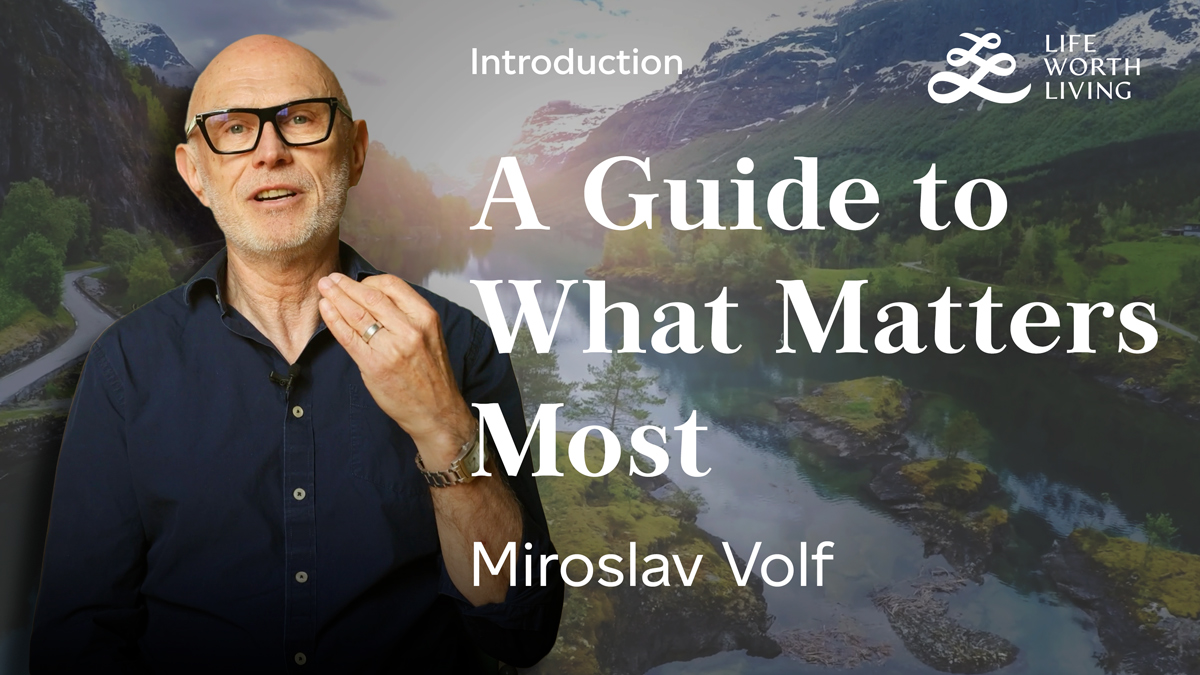
Miroslav Volf asks: What can we do to pursue and truly live a life worthy of our shared humanity?
Many of us today are like painters who do everything to improve our tools, materials, and prepare to paint, but never actually start painting. We constantly seek tools for a better life, but never start living. What can we do to pursue and truly live a life worthy of our shared humanity?
Theologian and Life Worth Living co-founding professor, Miroslav Volf introduces this chapter-by-chapter video curriculum series based on his bestselling book (with Ryan McAnnally-Linz and Matthew Croasmun), Life Worth Living: A Guide to What Matters Most.
Many of us today are like painters who do everything to improve our tools, materials, and prepare to paint, but never actually start painting. We constantly seek tools for a better life, but never start living. What can we do to pursue and truly live a life worthy of our shared humanity?
Theologian and Life Worth Living co-founding professor, Miroslav Volf introduces this chapter-by-chapter video curriculum series based on his bestselling book (with Ryan McAnnally-Linz and Matthew Croasmun), Life Worth Living: A Guide to What Matters Most.
Transcript
Perhaps a good way to offer some reasons is to look at how many of us live today. A German sociologist and a friend of mine, Hartmut Rosa described many of us with the help of an image. In a way, we moderns resemble a painter who is forever concerned about improving their tools. The colors and brushes, the air condition and lighting, the canvas and easel, and so on, but never really starts to paint.
Now, no good painter will act in such a self sabotaging way. No professional will, and yet, when we step out of our work roles, we fixate on the means to life and And often forget to live our life. Life itself turns into mere means to life.
There are many reasons why we slave away in the prison house of means. One of them is that various visions of good life have become a private matter. To figure out what we should do with our life, we deliberate about our talents and our interests, we consult with family and friends, and yet, what is the one piece of advice that we always get, in fact, that we always expect to get?
Pursue your dream. Follow your deepest desires. The privatization of the good puts much weight on our desires and dreams. They rule. But our desires and dreams change because our world is changing. And while pursuing our dreams, we compete with others to be ready for a new dream and to win the race. We need good tools, the means to achieve our goals. That's why so much of our personal and collective desire is tied to the acquisition of economic, reputational, and bodily capital.
And so we go into the studio, not to paint, but to work endlessly on getting ourselves ready to paint. This book is written to help us pick up a palette and a paintbrush, go to our canvas, and to start painting. To start living lives with purpose, lives that are worthy of our humanity.
Keep browsing


Join the LWL Community


